
Choosing Window Treatments for Historic Tacoma Homes
Historic and older Tacoma homes often feel different from newer construction before you even notice why. The rooms may have heavier trim, taller windows, original woodwork, divided panes, unusual window depths, or proportions that are difficult to match with a product chosen from a catalog.
An older home does not need every window treatment to look old. It needs something that respects the architecture, works with the room, and solves the privacy and light-control problems you actually have.
That usually means paying attention to proportion, mounting, material, and how much of the original window detail stays visible.
Start With the Window, Not the Trend
A treatment that looks great in a new condo may feel completely wrong in a Craftsman, Tudor, bungalow, or other older home.
Before choosing a style, look at the window itself:
- How deep is the opening?
- Is there substantial casing or trim?
- Are there original handles, locks, or cranks that need clearance?
- Does the sash move in a way that affects the treatment?
- Is the window unusually tall or narrow?
- Do you want the woodwork to remain visible?
Those details can eliminate some options and make others much stronger choices.
Protect the Trim Instead of Hiding It
One of the easiest ways to make an older room feel wrong is to cover the details that give it character.
If the window has substantial wood casing, an inside-mounted shade may allow more of that trim to remain visible. In other rooms, an outside mount may be the practical choice because the opening does not have enough depth.
Drapery can also work well because it can frame the window instead of covering the casing directly.
The important thing is to decide intentionally. The treatment should not accidentally hide the best part of the window just because that was the easiest way to install it.
Roman Shades Add Softness Without Taking Over the Room
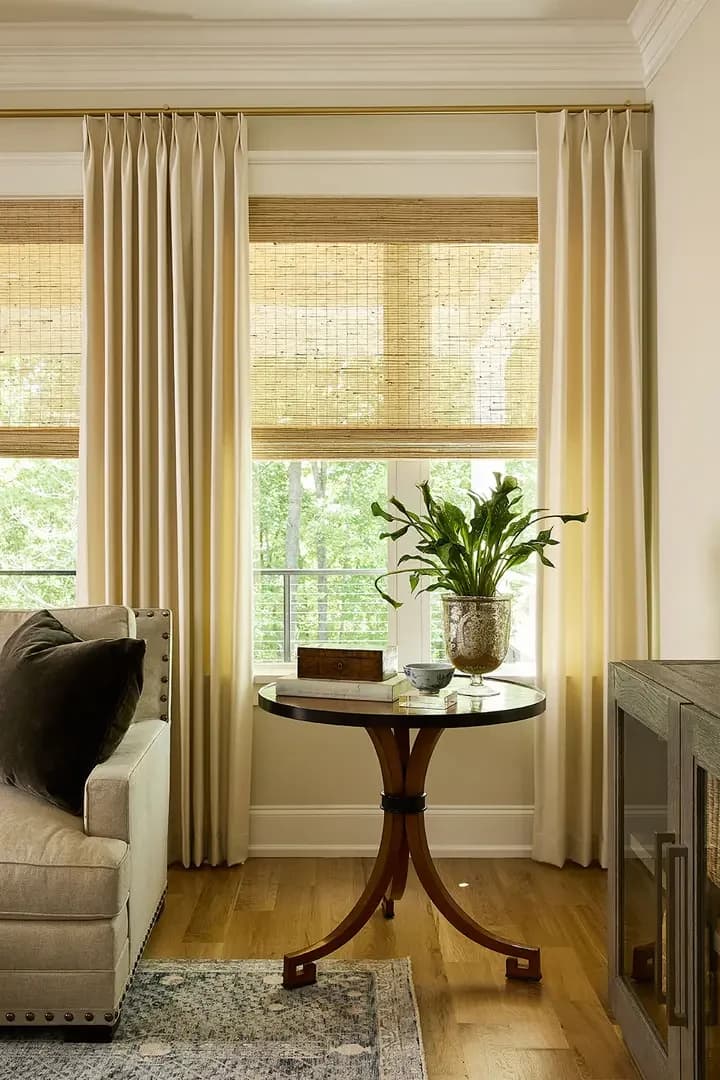
Roman shades are a natural fit in many older interiors because they bring fabric and texture to the window without requiring the visual weight of full drapery.
The fabric choice makes a big difference. A restrained texture or warm neutral can feel connected to original woodwork and traditional proportions without making the room look formal.
Lining can also change the function. A decorative Roman shade in a living room may need only light filtering, while a bedroom may benefit from stronger privacy or room darkening.
Roller Shades Can Work in Historic Homes Too
Roller shades are often associated with modern interiors, but a clean roller shade can work very well in an older home when the material and mounting are chosen carefully.
The simplicity can actually help when the window itself has a lot of architectural detail. Instead of adding another strong visual element, the shade stays quiet and lets the casing, glass, and room remain the focus.
A roller shade can also disappear into a relatively small stack when it is raised, which is useful when you want to expose as much of the original window as possible.
Woven Shades Bring Natural Texture
Woven shades can complement older Tacoma homes because they introduce texture and warmth without needing an ornate pattern.
They work especially well in rooms with:
- Wood trim
- Hardwood floors
- Natural finishes
- Warm paint colors
- Traditional or transitional furnishings
Privacy depends on the weave and whether the shade is lined. An unlined woven material can be beautiful in daylight but may not provide enough evening privacy for a bedroom or street-facing room.
Drapery Can Reinforce the Proportions of Tall Windows
Older homes often have windows with strong vertical proportions. Drapery can work with that shape instead of fighting it.
Floor-length panels can make a tall window feel deliberate and can frame detailed trim without hiding it. They can also add softness to rooms with a lot of wood, plaster, or other harder surfaces.
The hardware matters just as much as the fabric. Rod position, stack space, panel fullness, and how far the drapery extends beyond the window all affect whether the finished treatment feels graceful or crowded.
Layering Helps When One Treatment Cannot Do Everything
A single treatment may not solve every need in an older room.
You may want a shade for everyday privacy and light control, then drapery for softness and stronger coverage at night. Or you may want an inside-mounted shade that leaves the trim visible with side panels that help frame the wall.
Layering is especially useful when the homeowner wants the room to feel finished without sacrificing practical control.
Do Not Ignore Drafts and Temperature
Older windows can sometimes feel colder near the glass or allow more temperature change than newer assemblies.
Window treatments are not a replacement for repairing the window itself, but some products can add an insulating layer. Cellular shades and lined drapery are two common options when comfort near the glass is part of the problem.
The fit matters. A treatment with large gaps around the edges will behave differently from one that sits closer to the opening.
Bedrooms and Living Rooms Usually Need Different Answers
The fact that the whole house is historic does not mean every room needs the same treatment.
A bedroom may need room darkening and strong nighttime privacy. A living room may prioritize daylight and the appearance of the original trim. A dining room may benefit from drapery or a textured shade. A home office may need adjustable glare control.
Keeping the materials and colors related is usually more important than forcing one product onto every window.
Motorization Does Not Have to Look Modern
Motorization can still make sense in an older home, especially on tall windows or openings that are difficult to reach.
The operating system does not have to become a visible design feature. Depending on the selected product, the motor can be integrated into a treatment that still looks appropriate for the room.
That can be useful when the homeowner wants the appearance of a traditional or soft treatment but needs easier daily operation.
Compare Samples Against the Original Materials
Older homes often have finishes that are difficult to judge from a photo. Wood tones, aged flooring, tile, plaster, and changing natural light can shift the way a fabric or finish reads.
Bring the sample into the room. Hold it next to the trim. Look at it in daylight and with the interior lights on. Step back and see how it feels from across the room.
That is much more useful than trying to decide whether something is "historic enough" in the abstract.
Let the House Lead the Decision
An older Tacoma home does not need a window treatment that pretends to be original to the house. It does need something that respects the proportions, trim, and materials already there.
Keep the good details visible when you can. Use fabric, texture, hardware, and mounting choices that feel at home in the room. Then solve the practical problems like privacy, glare, room darkening, and daily operation without erasing the character that made the window worth working around.