Custom Window Treatments For Federal Way’s Established Homes And Changing Neighborhoods
Federal Way Blinds, Shades & Drapery

Custom Window Treatments For Federal Way’s Established Homes And Changing Neighborhoods

Blinds, shades, drapery, and motorized treatments for older houses, renovated interiors, close neighborhoods, condos, townhomes, and modern additions

Federal Way is not made up of one kind of home. Older ramblers and split-levels sit alongside lake properties, established subdivisions, condominiums, townhomes, apartments, and pockets of new construction. Some homeowners are replacing coverings that have been in place for decades. Others are renovating a recently purchased house or adapting to greater privacy needs as the city becomes denser. Window Fashions Northwest helps Federal Way residents choose custom window treatments around the actual architecture, light, surrounding neighborhood, and everyday use of the room.

Window Treatments For A City Of Different Homes

Update The Windows Without Treating Every Federal Way Home The Same

Federal Way developed over several decades rather than through one wave of construction. Its neighborhoods include modest mid-century ramblers, split-level family houses, larger traditional homes, properties near lakes and Puget Sound, condominium communities, townhomes, and newer infill developments. Those homes have different window proportions, different privacy concerns, and different relationships with the surrounding neighborhood.

An older rambler may have wide front windows, original trim, and a sliding door connecting the living area to the backyard. A split-level may place the main living room above the street, where glare and evening privacy become more noticeable. A newer townhome may have tall, narrow windows facing another building. A condo may have limited mounting space and large openings that need to be covered without making the room feel smaller.

That variety is why choosing one default blind for the entire house rarely produces the best result. Window treatments need to account for the age of the home, the size and depth of each opening, the direction of the sun, surrounding houses, nearby streets, furniture placement, and how frequently the treatment will be adjusted.

We offer roller shades, cellular shades, woven shades, Roman shades, custom blinds, drapery, and motorized window treatments. Each option provides a different balance of privacy, daylight, glare control, insulation, maintenance, and appearance. We help narrow those choices according to what the room actually needs rather than what happens to be displayed most prominently in a showroom.

Many established Federal Way homes have been improved gradually. The kitchen may be new while the living-room blinds remain from a previous owner. Flooring and paint may have changed while old vertical blinds still cover the sliding door. Replacing those treatments can make separate renovations feel connected and remove one of the last elements causing the interior to look unfinished.

Privacy is also becoming more important in many parts of Federal Way. Homes may face active streets, sidewalks, neighboring windows, shared parking areas, or newer development that changed what can be seen from outside. Light-filtering shades, adjustable blinds, privacy liners, and layered treatments can protect the room while preserving daylight during the hours it is most useful.

Federal Way’s wooded setting creates another challenge. Trees can provide shade during part of the day while openings in the canopy allow strong direct sun at other times. Lake-facing and west-facing rooms may receive intense afternoon light, while homes beneath heavier tree cover may need privacy without sacrificing already limited natural light. The same material should not automatically be used for both.

Motorized shades can be useful in remodeled homes with tall windows, wide openings, grouped treatments, or furniture that makes manual controls difficult to reach. They can also help manage glare and privacy on a schedule, allowing treatments to adjust throughout the day without turning the room into an overly complicated smart-home project.

Because we bring samples directly to your Federal Way home, condo, or townhome, you can compare fabrics, colors, textures, finishes, and operating systems beside the actual flooring, trim, cabinetry, furniture, and daylight. We take measurements, identify practical limitations, and help you choose treatments that feel appropriate for the property rather than imposed on it.

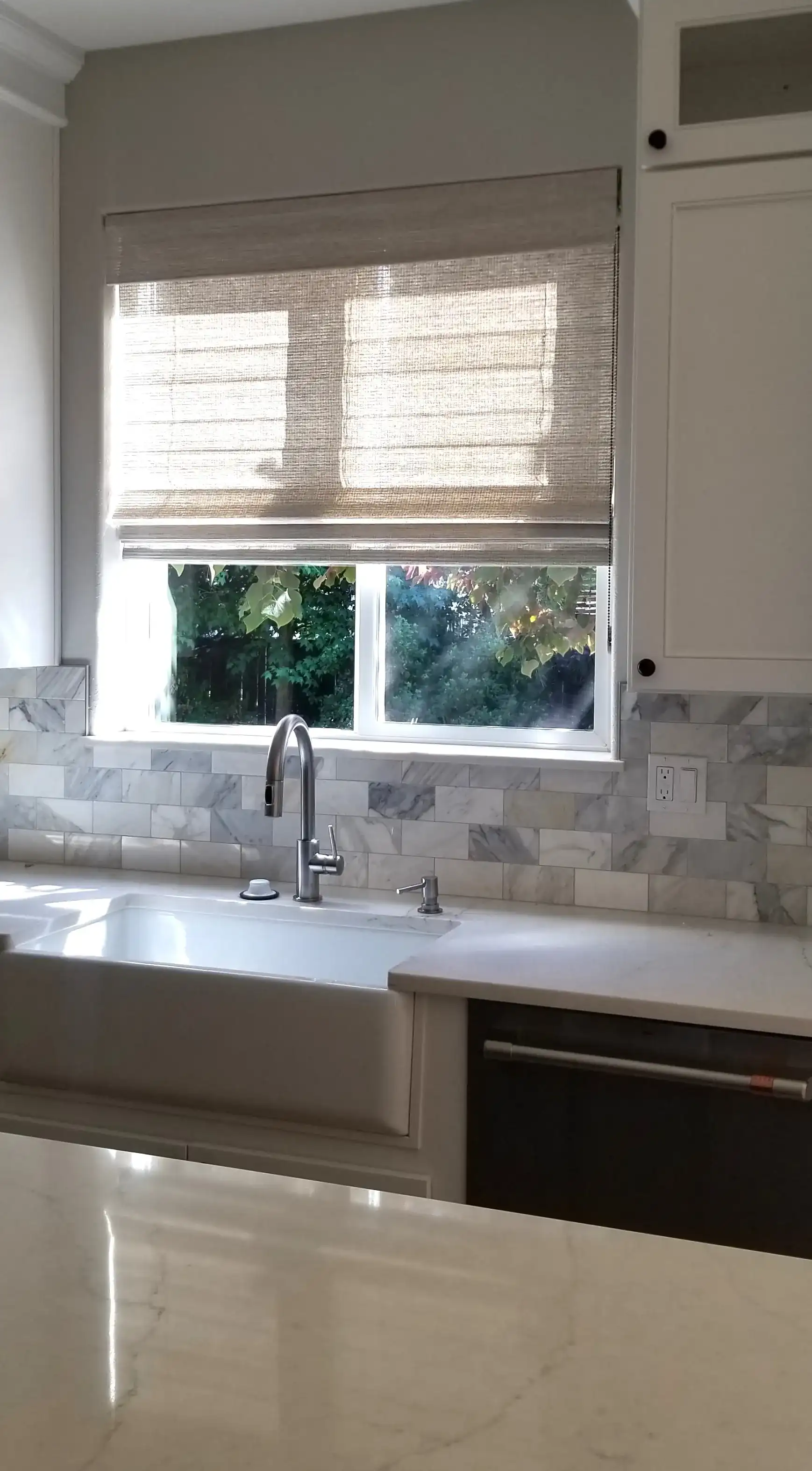
Custom shades installed in an established Federal Way living room
Federal Way Window Treatment Questions

Choosing Blinds, Shades And Drapery For Federal Way Homes

Answers for homeowners updating ramblers, split-levels, lake properties, condos, townhomes, and renovated houses throughout Federal Way.

Roller shades, cellular shades, Roman shades, woven shades, custom blinds, and drapery can all work well. The right choice depends on the proportions of the windows, the original trim, the depth of the opening, and how much of the home has already been renovated.

Yes. Modern operation does not require an aggressively contemporary appearance. Natural woven materials, understated Roman shades, classic blinds, restrained roller fabrics, and properly proportioned drapery can provide updated function while remaining appropriate for the house.

Wide windows may use multiple coordinated roller or cellular shades, custom blinds, traversing drapery, or motorized treatments. Dividing the opening can reduce weight, improve reliability, and allow different portions of the window to be adjusted independently.

Split-level homes often have broad living-room windows, street-facing upper floors, sliding doors, and bedrooms positioned at different elevations. Roller shades, cellular shades, blinds, Roman shades, and drapery can be selected separately for the privacy and light conditions on each level.

Yes. Depending on the door and available wall space, alternatives may include panel track treatments, traversing drapery, updated vertical products, or other custom configurations that preserve access while improving privacy and appearance.

Light-filtering roller shades, cellular shades, adjustable blinds, Roman shades, lined woven shades, and layered drapery can all improve privacy. The best solution depends on whether the room needs daytime coverage, nighttime coverage, or both.

Yes, particularly during the daytime. Light-filtering materials can soften the view into the room while preserving natural light. At night, when interior lights are brighter than the exterior, stronger privacy usually requires a more opaque shade, closed blind, liner, or secondary drapery layer.

Homes beneath tree cover often need treatments that preserve available daylight while controlling privacy and periods of direct sun. Light-filtering roller shades, adjustable blinds, woven shades, and layered treatments can provide flexibility as exterior light changes throughout the day and throughout the year.

Solar shades and light-filtering roller shades can reduce glare while preserving some outside visibility. Cellular shades, Roman shades, blinds, and lined drapery may be more appropriate when stronger light reduction, insulation, or nighttime privacy is needed.

Solar shades, roller shades, adjustable blinds, and motorized treatments can control glare while allowing the view to remain visible when conditions permit. The appropriate material depends on the direction of the window, reflected light from the water, privacy, and how much openness you want during the day.

They can reduce the amount of direct sunlight reaching floors, furniture, artwork, and interior finishes. The level of protection depends on the material, opacity, treatment position, and whether the covering is consistently used during the strongest sunlight.

In many cases, yes. Condo association rules should be reviewed first, particularly when exterior appearance, mounting, or alterations are regulated. We also evaluate window depth, available wall space, and the mounting surface before recommending a product.

Townhomes often have tall or narrow windows, close neighboring buildings, limited wall space, and multiple levels with different light conditions. Roller shades, cellular shades, Roman shades, blinds, drapery, and motorized treatments can be selected around those specific constraints.

Yes. Large openings may use several coordinated shades, panel-style treatments, or custom drapery rather than one oversized blind. We determine which configuration will fit the space, operate reliably, and remain properly proportioned.

Yes. During the in-home consultation, we compare samples with flooring, cabinetry, countertops, paint, trim, lighting, furniture, and other completed improvements. This helps the window treatments connect separate renovations and finish the room properly.

Yes. Many homeowners begin with the primary bedroom, living room, sliding door, street-facing windows, home office, or rooms with the strongest glare. We can coordinate materials and operating styles so future treatments can be added without making the house feel pieced together.

Yes. Motorization can be added to many existing homes without extensive remodeling. Battery-powered options may avoid new electrical work, while compatible systems can be controlled by remote, wall control, app, voice integration, or automatic schedule.

They are especially useful for high windows, wide shades, grouped openings, windows behind furniture, and rooms where several treatments are adjusted throughout the day. Multiple compatible shades can often be grouped so they move together.

Room-darkening roller shades, cellular shades, Roman shades, and lined drapery can all significantly reduce incoming light. We also consider the mounting method and gaps around the treatment because those details affect the result as much as the fabric.

Cellular shades, lined drapery, and other insulating treatments can reduce heat gain through sunny windows and help slow heat loss during colder periods. The amount of improvement depends on the product, fit, mounting method, and condition of the window.

Yes. We measure each opening, help select the appropriate treatments, order the products, and complete professional installation so everything fits correctly, operates properly, and is securely mounted.

Yes. We work throughout Federal Way, including Twin Lakes, Steel Lake, Mirror Lake, Lakota, Adelaide, Marine Hills, Redondo, Star Lake, and surrounding South King County communities.

Choose Window Treatments That Fit The House You Actually Own

Choose Window Treatments That Fit The House You Actually Own

We’ll bring samples to your Federal Way home, condo, or townhome, evaluate the architecture, surrounding neighborhood, natural light, privacy, and daily use of each room, and help you choose treatments that solve the problem without flattening the character of the property.

Book Your In-Home Consultation