
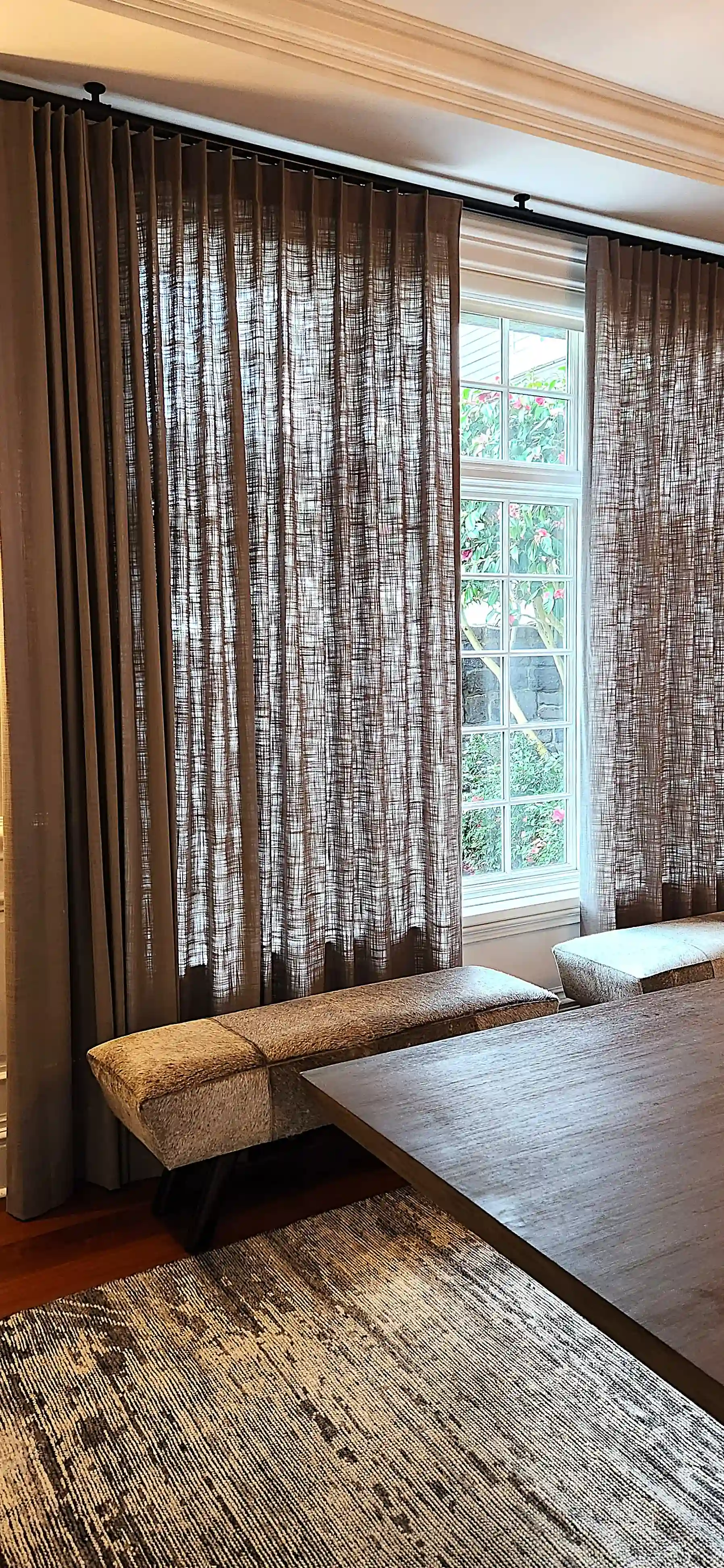
Custom Window Treatments: What Happens From Consultation to Installation?
Sometimes a homeowner knows exactly what is bothering them about a window but has no idea what kind of treatment will solve it. Other times they already have a fabric or style in mind, but they are not sure how it will look or operate once it is installed.
That is completely normal. You do not have to figure out the product, the measurements, and the hardware before calling me. The point of an in-home consultation is to work through those choices in the room where the treatment will actually be used.
Here is what I want you to know about the process.
First, We Talk About What the Window Needs to Do
Before choosing a color, I want to understand the reason you are considering new window treatments.
Is the afternoon sun making the room uncomfortable? Do you want privacy after dark? Are the existing blinds awkward to raise or lower? Are you trying to soften a room that feels unfinished? Maybe you love the view and do not want a bulky treatment covering it.
Those details help narrow down the options. A shade that looks beautiful but does not solve the original problem is not the right shade for you.
It also helps to tell me about your routines. A treatment that opens once in the morning and closes once at night has a different job from one that stays in place most of the time.
Then We Look at the Actual Windows
Measurements are important, but they are not the only thing I look at. The depth of the window, the trim, the way the window opens, the handles, nearby furniture, and even the direction of the light can affect the recommendation.
This becomes especially important with large windows, sliding doors, and openings that are difficult to reach. A treatment needs to fit the space, clear the things around it, and operate comfortably.
A custom order should be based on the actual opening and the chosen mounting method, not just a rough measurement someone took while shopping online.
You Get to See Materials in Your Own Home
A fabric can look different in a photograph, in a showroom, and in your living room. Warm paint can change how a neutral fabric reads. Bright daylight can make a material look lighter. In another room, the same fabric may feel much darker.
When I bring samples, we can look at them next to your wall color, flooring, and furniture. We can also compare how much light comes through different materials and discuss the level of privacy you want.
For some rooms, a light-filtering shade may be ideal. Others need stronger room darkening. Sometimes drapery is the finishing touch, and sometimes a simpler blind or shade makes more sense.
We Choose How You Will Operate the Treatment
The operating system is part of the decision, not an afterthought.
For a window you can reach easily, a manual option may be perfectly practical. For tall windows, treatments behind furniture, or several shades you want to move together, motorization may be worth considering. Product and configuration availability vary, so we look at what works for the specific window.
The goal is not to add features you will never use. It is to choose something you will be happy to live with every day.
The Order Needs the Right Details
Once the product, fabric, measurements, mount, and operating choices are settled, those specifications guide the custom order. This is why I like resolving the little questions before the order is placed.
Where will the treatment sit? What should it clear? How much coverage do you want? If you are choosing drapery, how should the finished length and fullness look? If several shades are next to each other, how should they line up?
Small decisions here affect the finished appearance. They are easier to address before a treatment is made than after it arrives.
Production and Scheduling Are Not the Same for Every Product
Custom window treatments are not all made on the same timeline. Lead times depend on the manufacturer, product, material, configuration, and availability. Installation scheduling is another part of the process.
If you have a particular date in mind, such as moving into a new home or getting a room ready for guests, tell me at the consultation. That gives us a chance to discuss realistic options and timing instead of assuming every product is available immediately.
Installation Is Where the Planning Comes Together
A properly chosen treatment should look right in the room and work the way it was intended to work. The final fit, mounting position, clearance, and operation all matter.
It is worth paying attention to how a shade raises and lowers, how it stacks when open, and what the window looks like from across the room. The finished treatment should feel like it belongs there, not like something that was added as an afterthought.
You Do Not Need to Start With the Whole House
If you have one window that bothers you every day, that is enough reason to start. We can solve the living room first, address a bedroom that needs better privacy, or find a treatment for a difficult opening.
I would rather help you choose the right solution for one window than rush you into choosing the same product for every room.
Window Fashions Northwest serves homeowners across Pierce County and surrounding South Puget Sound communities with in-home window treatment consultations. If you are ready to explore custom blinds, shades, or drapery, start by telling me what is happening at your windows. We can work through the details together.