
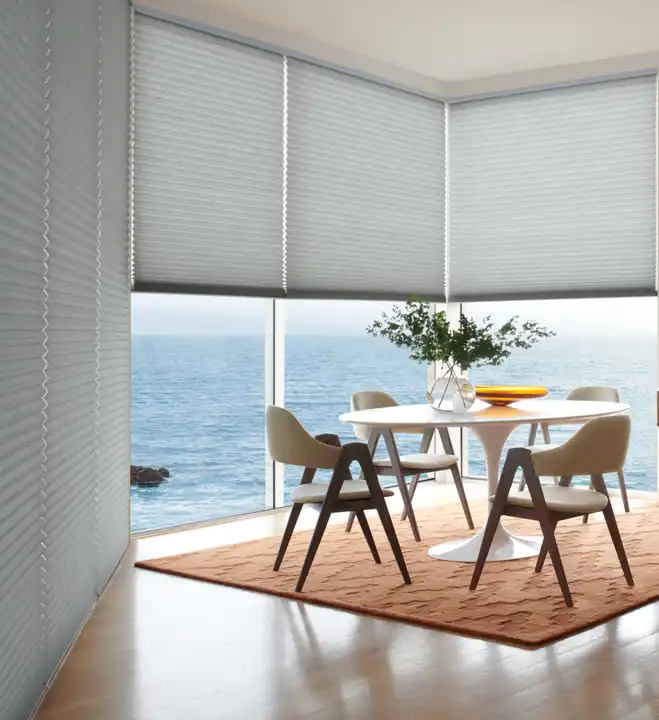
Light-Filtering vs. Room-Darkening Honeycomb Shades
Honeycomb shades are one of my favorite options when a homeowner wants something clean, practical, and easy to live with. Once people decide they like the cellular style, the next question is usually about fabric: should the room use light-filtering or room-darkening shades?
There is not one correct answer for the whole house. A family room that needs soft daylight may want the exact opposite of a bedroom where early morning sun is the problem. The best choice depends on how the room is used, what the windows face, how much privacy you need, and how much natural light you want to keep when the shade is down.
Light-Filtering Shades Keep the Room Bright
A light-filtering honeycomb shade softens incoming daylight instead of shutting it out. The room still feels connected to the window, but the light is diffused through the fabric, which can reduce glare and make the space more comfortable without turning it dark.
That makes light-filtering fabrics a good fit for living rooms, kitchens, offices, hallways, and other spaces where you want privacy and light control without losing the daytime brightness. On a gray Northwest day, keeping that available daylight can matter.
The exact effect depends on the fabric and color. A lighter material can feel brighter and more open, while a deeper tone can create a softer, more enclosed look even within the same general opacity category.
Room-Darkening Fabrics Solve a Different Problem
Room-darkening honeycomb shades are designed for spaces where reducing incoming light matters more. Bedrooms are the obvious example, especially for shift workers, children who nap during the day, or anyone with windows that catch strong morning or evening sun.
They can also help in media rooms, guest rooms, and spaces where glare makes screens difficult to use. The goal is not always creating total darkness. It is usually about cutting much more of the incoming light so the room can function the way you need it to.
That distinction is important because people sometimes expect every room-darkening shade to create a completely black room. Light can still enter around the edges of a treatment depending on the window, mounting style, and installation. If the goal is maximum darkness, those details need to be considered with the fabric.
Privacy Changes After Dark
Privacy is another reason I like making this decision in the actual room instead of from a product photo. During the day, a light-filtering fabric may provide plenty of privacy while still glowing with natural light. At night, when the interior lights are on, the relationship between inside and outside changes.
Different fabrics handle that differently, so it is worth thinking about the room after sunset, not only in daylight. A front-facing living room, bathroom, or bedroom may have different privacy needs from a second-floor space that faces the backyard.
This is where sample fabrics help. You can hold them at the window, see how much light passes through, and get a better sense of how the material will behave in the room where it will actually live.
Direction Matters More Than People Expect
A north-facing window and a west-facing window can feel completely different even when they are the same size. One may receive soft indirect light most of the day, while the other gets intense late-afternoon sun that creates heat and glare.
That means the same fabric can be perfect in one room and frustrating in another. A light-filtering honeycomb shade may be ideal where the goal is simply softening daylight. On a bedroom window that catches direct sunrise, room darkening may make far more sense.
I like to look at the window direction, the time of day the room is used, and what the light is doing now. Those details are more useful than starting with a blanket rule for the whole home.
Top-Down Options Can Give You More Control
Honeycomb shades can also be useful when you want daylight and privacy at the same time. Depending on the product and configuration, top-down operation lets you lower the top of the shade while keeping the lower portion covered.
That can be a very practical solution for street-facing windows, bathrooms, or rooms where you want natural light higher up without opening the entire window to view. It changes the conversation from choosing between open and closed to choosing exactly where the privacy line should sit.
For some homes, that flexibility matters more than the difference between two fabric categories.
Motorization Can Make Daily Adjustments Easier
If you are going to change the shades several times a day, the operating method becomes part of the decision. A manual shade may be perfect for an easy-to-reach window. Taller windows, windows behind furniture, or several shades that need to move together may be better candidates for motorization.
This can be especially useful with room-darkening shades in bedrooms or light-filtering shades in large living spaces. The point is not adding technology because it is available. The point is making sure the treatment is convenient enough that you actually use it the way it was intended.
You Can Mix Both in the Same House
There is no reason every honeycomb shade in the house has to use the same opacity. In fact, most homes work better when the fabric choice follows the room.
A living room may stay light filtering while the bedrooms use room darkening. A home office may need a fabric that reduces glare but still keeps the room bright. A bathroom may prioritize privacy. The exterior view of the home can still stay coordinated by choosing complementary colors and a consistent product family.
That is one of the advantages of custom window treatments. You can keep the overall look connected without forcing every room to solve the same problem.
Start With the Room, Then Pick the Fabric
If you are trying to choose between light-filtering and room-darkening honeycomb shades, think about what bothers you now. Is the room too exposed after dark? Is morning light waking you up? Is afternoon glare making the television hard to see? Do you want privacy without losing the daylight?
Those answers usually point in the right direction faster than a catalog does.
When I come out for an in-home consultation, we can look at the actual windows, compare fabrics in your lighting, and decide where light filtering makes sense and where room darkening is worth it. Honeycomb shades are flexible enough to work throughout the home, but the best results come from matching each room to the way you really use it.