
How to Balance Privacy and Natural Light With Window Treatments
One of the biggest challenges when choosing window treatments is finding the right balance between privacy and natural light.
Most homeowners don't want to keep their windows completely uncovered, but they also don't want every room to feel dark just because privacy is important.
The right solution depends on the window, the direction it faces, what is outside of it, and how the room is used throughout the day.
Start With the Privacy the Room Actually Needs
Privacy needs can be very different from one room to another.
A bedroom facing a neighboring home may need considerably more coverage than a second-story living room overlooking a backyard.
Before selecting a window treatment, consider what can actually be seen through the window.
Street-facing windows, bathrooms, bedrooms, and windows close to neighboring properties tend to require more privacy. Other windows may only need occasional coverage during certain parts of the day.
Understanding the actual privacy concern makes it easier to choose a treatment without unnecessarily blocking natural light.
Light Filtering Does Not Always Mean Privacy
One of the most important distinctions to understand is the difference between filtering light and providing privacy.
Light-filtering fabrics soften incoming sunlight and can make a room feel more comfortable during the day. Depending on the fabric, they may also limit visibility into the home.
However, lighting conditions change after sunset.
When it is dark outside and lights are turned on inside the home, some fabrics that provided daytime privacy may allow considerably more visibility from outside.
This is why a window treatment should be considered under both daytime and nighttime conditions.
Consider the Direction the Window Faces
The direction of the window can have a major effect on how much light enters the room and when that light becomes uncomfortable.
A window receiving strong afternoon sunlight may need different coverage than one receiving softer morning light.
Direct sunlight can create glare, increase heat, and make television or computer screens difficult to see.
In those situations, homeowners may want a treatment that allows them to adjust the amount of incoming light throughout the day rather than choosing between a completely open or completely covered window.
Adjustable Blinds Offer Flexible Control
Blinds remain useful because their slats can be adjusted without fully uncovering the window.
Tilting the slats can redirect incoming light while still providing some privacy.
Depending on the room, blinds may allow homeowners to bring daylight toward the ceiling while reducing direct visibility through the lower portion of the window.
Different materials also create different appearances.
Wood blinds can add warmth, while other blind styles may provide a cleaner or softer look depending on the design of the room.
Shades Can Provide Different Levels of Coverage
Shades are available in a wide variety of fabrics and opacity levels.
Some are designed primarily to diffuse sunlight, while others provide significantly stronger privacy or room-darkening performance.
This makes fabric selection especially important.
A light-filtering shade may work well in a living room where maintaining natural light is the priority, while a bedroom may benefit from a more opaque fabric.
The best choice depends on what you want the treatment to accomplish when it is fully closed.
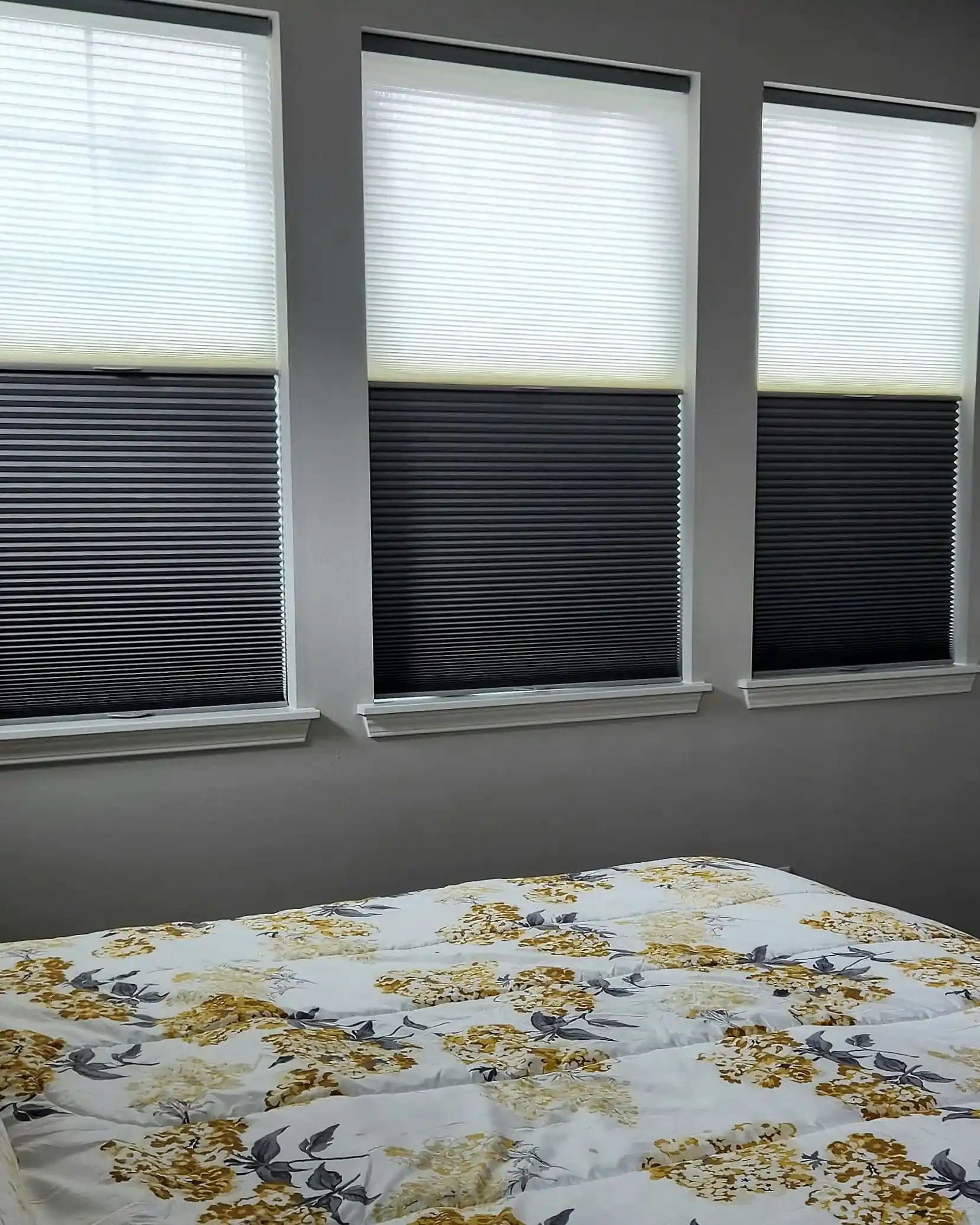
Top-Down Bottom-Up Shades Can Solve Difficult Privacy Problems
Some windows need privacy at eye level while still benefiting from natural light near the top.
Top-down bottom-up shades can be useful in these situations because they allow portions of the window to remain uncovered while other sections stay protected.
For example, the lower portion of a street-facing window can remain covered while daylight enters through the top.
This can be particularly helpful in bedrooms, bathrooms, home offices, and homes positioned close to sidewalks or neighboring properties.
Instead of covering the entire window, homeowners can control the part that actually creates the privacy concern.
Sheer Window Treatments Can Soften the View
Sheer window treatments can provide another way to manage bright windows without making the room feel closed off.
They help diffuse incoming sunlight and soften the visual connection between the interior and exterior.
Some sheer products also provide adjustable vanes or other features that allow homeowners to change the amount of privacy and light throughout the day.
They can work especially well in living rooms, dining rooms, and other spaces where maintaining an open, bright appearance is important.
Layering Window Treatments Creates More Flexibility
Sometimes one window treatment does not need to perform every job.
Layering treatments can provide more control over privacy, light, appearance, and room darkening.
For example, a shade can provide practical everyday light control while decorative drapery adds additional privacy and softness when needed.
This approach also creates more design possibilities.
Fabrics, textures, patterns, and colors can be coordinated with furniture and other materials throughout the room rather than treating the window treatment as a purely functional product.
Bedrooms Often Need Different Solutions
Bedrooms frequently require stronger privacy than shared living spaces.
They may also need greater control over early morning sunlight, streetlights, or exterior lighting.
A treatment that works perfectly in a living room may therefore feel inadequate in a bedroom.
Homeowners should consider both privacy and sleeping preferences when selecting bedroom window treatments.
Some people prefer a small amount of filtered morning light, while others want the room to remain as dark as possible until the treatment is opened.
Street-Facing Windows Require Careful Planning
Street-facing windows can be particularly challenging because homeowners often want privacy without losing the natural light that makes the front of the home feel welcoming.
Keeping a window completely covered all day solves the privacy problem, but it can also make the room unnecessarily dark.
Adjustable treatments can provide more flexibility.
Depending on the window, homeowners may be able to cover the areas most exposed to the street while allowing light through other portions of the glass.
The height of the window, distance from the sidewalk, surrounding landscaping, and neighboring homes can all affect the amount of privacy required.
See the Options Inside Your Own Home
Window treatment fabrics can behave differently depending on the lighting around them.
A material viewed in a showroom or catalog may appear different when placed against your wall color, flooring, furniture, and natural light.
Privacy can also be difficult to judge from a small fabric sample without considering the room and window where it will actually be installed.
Window Fashions Northwest brings samples directly to your home so you can compare fabrics, colors, textures, and window treatment styles in the space where they will actually be used.
Kimberly can evaluate the window, surrounding environment, mounting options, privacy concerns, light direction, and how you use the room before recommending a solution.
This is especially helpful when you are trying to keep privacy, natural light, function, and the look of the room in balance.
Test Privacy in the Room, Not on the Label
Terms like light filtering, sheer, and room darkening are useful, but they do not tell you exactly what a fabric will do on your window. The same material can feel private in one room and too open in another.