
Best Window Treatments for Bedrooms: Privacy, Room Darkening, and Comfort
Bedrooms are one of the rooms where I ask the most questions before recommending a window treatment. A living room can sometimes get away with a treatment that is mostly about appearance and general light control. A bedroom is more personal. You may need privacy from a nearby house, less morning light, a darker room for sleeping, easier operation, or a softer look that makes the room feel finished.
There is not one bedroom shade or blind that is automatically right for everyone. The best choice depends on the window, the direction the room faces, what is outside, how dark you want the room, and how you use the treatment every day. I would rather understand those things first than start by telling you which product is popular.
Start With the Privacy You Need at Night
Bedroom privacy is different from daytime privacy. During the day, sunlight outside can make it harder to see into a home. At night, the situation reverses. Once the lights are on inside, an uncovered or lightly covered bedroom window can feel much more exposed.
Street-facing bedrooms and rooms close to neighboring homes usually need more dependable nighttime privacy. That does not always mean the room needs to stay dark all day. The right treatment can give you privacy when you need it while still allowing plenty of natural light when the room is in use.
This is also where the exact window matters. A second-story bedroom facing a private backyard may need something completely different from a first-floor bedroom facing the sidewalk. I look at what is actually outside the window and how visible the room feels before recommending how much coverage you need.
Room Darkening and Blackout Are Not Exactly the Same
A lot of people tell me they want blackout when what they really mean is that they want the bedroom much darker. Those are not always the same thing.
Room-darkening shades and fabrics can block a large amount of light and make a bedroom noticeably darker. True blackout performance is more difficult because light can still come around the sides, top, or bottom of a treatment even when the fabric itself blocks light very well.
If a client is sensitive to early morning sun, works nights, has a child's room that needs to stay darker, or simply sleeps better in a very dark bedroom, I pay close attention to those light gaps. The treatment, mounting method, window depth, and whether another layer is added can all affect the result.
The important thing is setting the right expectation. If you want the room darker, there are many good options. If you want it as close to fully dark as possible, we need to plan for the whole opening rather than only choosing a dark fabric.
Cellular Shades Are a Strong Bedroom Option
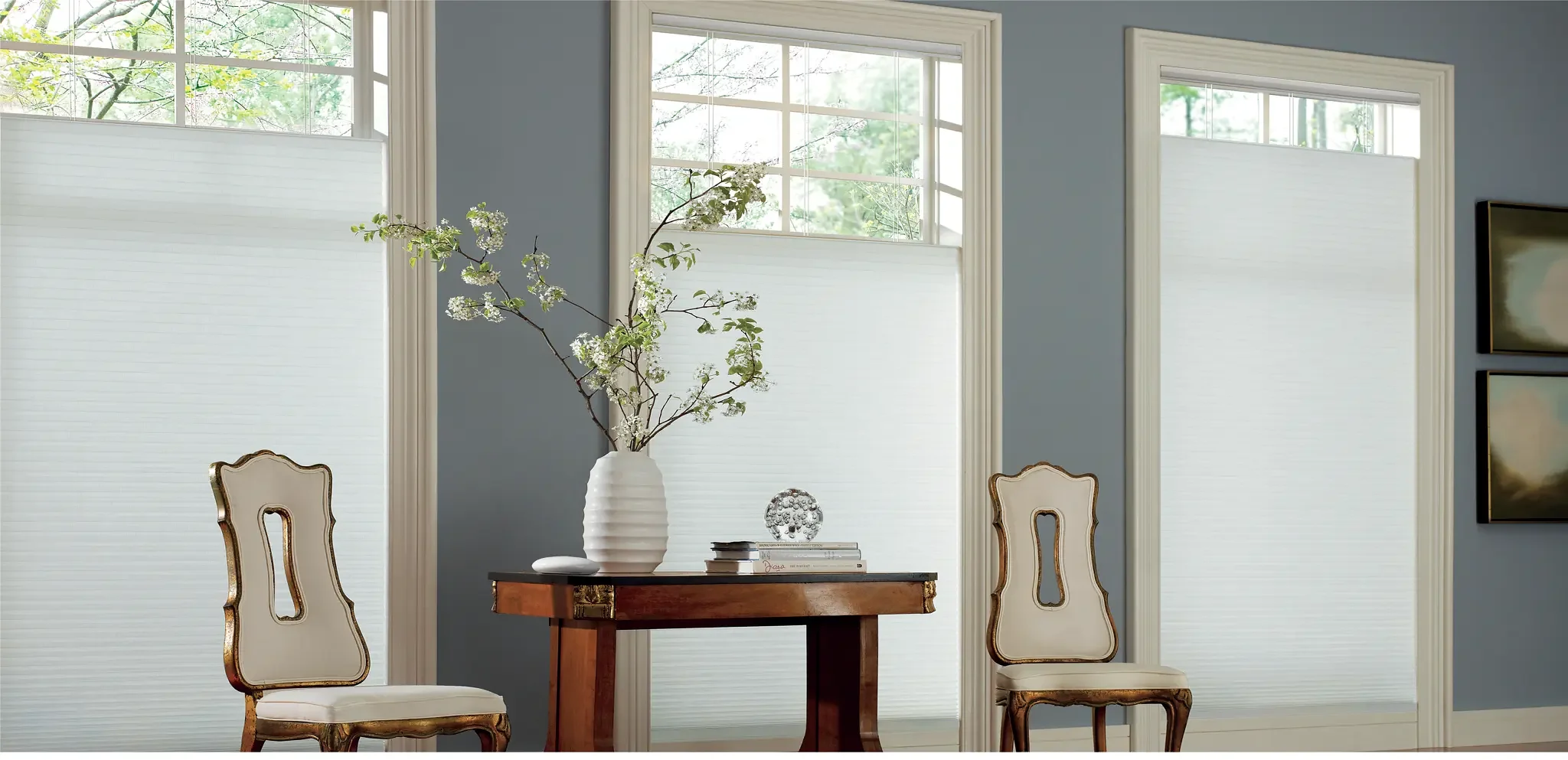
Cellular shades are one of the first options I consider for many bedrooms because they can provide privacy, soft light control, and a clean appearance without making the window feel heavy.
They are available in different opacity levels, including room-darkening options, so they can work in a guest room that only needs moderate privacy or a primary bedroom where controlling morning light is a bigger priority. Their cellular construction can also add a layer between the room and the glass, which many homeowners like in bedrooms that feel cold near the windows during the fall and winter or warm quickly in direct sun.
They also work well in rooms where you want the treatment to disappear visually when it is raised. If the rest of the bedroom already has strong furniture, bedding, artwork, or color, a simple cellular shade can handle the function without competing with everything else.
Roller Shades Keep the Window Simple
Roller shades are another practical choice when the goal is straightforward privacy and light control. They can be very clean visually, which works especially well in newer homes, modern bedrooms, or spaces where you do not want the window treatment to become a major decorative feature.
Fabric selection matters. A lighter filtering fabric can soften daylight while maintaining a comfortable feel during the day, while a room-darkening fabric can provide much stronger light control for sleeping.
Roller shades are also a good example of why I like seeing the room in person. A fabric that looks neutral in a sample book may look warmer, cooler, lighter, or darker next to your actual wall color, flooring, and bedding. Seeing the material in the bedroom gives you a much better idea of what it will really look like.
Roman Shades Add More Softness
Some bedrooms need more than function. If the room feels a little plain or you want the window treatment to contribute more to the design, a Roman shade can add fabric, texture, and softness while still giving you useful privacy and light control.
Roman shades can work especially well in traditional homes, transitional rooms, guest bedrooms, and spaces where a flat blind or roller shade feels too simple. Depending on the fabric and lining, they can be tailored for filtered light or stronger room darkening.
This is one of those products where proportion matters. The size of the window, the pattern of the fabric, how the shade stacks, and what is around the window all affect the finished look. A fabric that looks beautiful by itself still needs to make sense at the scale of the actual window.
Drapery Can Solve Problems a Shade Alone Does Not
Drapery is not only decorative. In a bedroom, it can be part of the light-control and privacy plan.
A shade may handle most of the daytime function, while lined drapery adds more coverage at night, softens the room, and helps reduce some of the visible light around the edges of the shade. This layered approach can be useful when you want the flexibility of an adjustable shade but also want the bedroom to feel more complete.
Drapery can also help with unusually wide windows, windows that sit behind furniture, or rooms where the architecture needs a stronger visual frame. I do not think every bedroom needs drapery, but when the room needs both function and softness, it can be the piece that pulls everything together.
Blinds Still Make Sense in Bedrooms
Blinds are still a very practical bedroom option. They give you adjustable privacy, allow you to tilt the slats as the light changes, and work well in rooms where you want a familiar treatment that is easy to understand and maintain.
The important question is whether the blind gives you enough darkness for the way you sleep. Slatted products are excellent for adjustable privacy and daylight, but they usually will not create the same dark room as a room-darkening shade or lined treatment.
For some homeowners, that is completely fine. If your priority is controlling views and light throughout the day rather than making the room very dark, blinds may be exactly what you need.
Think About Which Direction the Bedroom Faces
The direction of the window can make a big difference.
An east-facing bedroom can get strong light early in the morning. A west-facing room may stay bright and warm later in the day. A bedroom that receives very little direct sun may need privacy more than aggressive light control.
This is why I do not like choosing bedroom window treatments only from a catalog. I want to know what the light is doing in the room. If morning sun is the problem, we solve for that. If nighttime privacy is the real concern, we solve for that instead.
A treatment should answer the problem the room actually has.
Make Sure the Treatment Is Easy to Use Every Day
Bedroom window treatments tend to be operated a lot. You may open them every morning and close them every evening, which means convenience matters more than people sometimes expect.
If the window is behind a bed, difficult to reach, very tall, or part of a group of several windows, motorization may be worth considering. Being able to operate several shades together can be useful in a primary bedroom, especially when the windows are large or access is awkward.
Manual operation is still perfectly good for many rooms. I do not recommend motorization simply because it exists. I recommend it when it makes the room easier to use.
Do Not Forget the Rest of the Bedroom
The window treatment should work with the room, not look like it was selected separately from everything else.
I look at the wall color, flooring, trim, bedding, furniture, hardware finishes, and the amount of pattern already in the space. Sometimes the right answer is a quiet neutral treatment. Sometimes the room needs texture. Sometimes drapery is the opportunity to bring in a color or fabric that makes the whole bedroom feel more finished.
This is one of the biggest advantages of choosing treatments in your own home. We can hold the samples where they will actually live and see what happens in the real light of the room.
The Best Bedroom Window Treatment Is the One That Fits Your Routine
There is no single best blind, shade, or drapery treatment for every bedroom. The best choice is the one that gives you the privacy you need, the amount of darkness you actually want, the operation that feels easy, and a look that belongs in the room.
If your bedroom is too bright in the morning, too exposed at night, difficult to operate, or simply unfinished, start with the problem rather than the product. Tell me what the room is doing now and what you want it to do differently. I can come to your home, look at the windows with you, and help you compare options in the space where they will actually be used.