
Why Honeycomb Shades Make Sense for Fall
October is when a lot of people start noticing their windows again. The sun is lower, the evenings get darker earlier, and rooms that felt perfectly comfortable in July can suddenly feel more exposed or harder to keep comfortable. This month I want to spend some time talking about honeycomb shades because they are one of those products that can solve several everyday problems without making the room feel heavy.
Honeycomb shades are also a good example of why I like choosing window treatments in the home instead of treating every window the same way. The right fabric, opacity, color, operating style, and fit depend on the room and how you actually use it. A honeycomb shade can be simple and quiet in one space, room darkening in another, or motorized on a window that is difficult to reach.
The Honeycomb Shape Is More Than a Design Detail
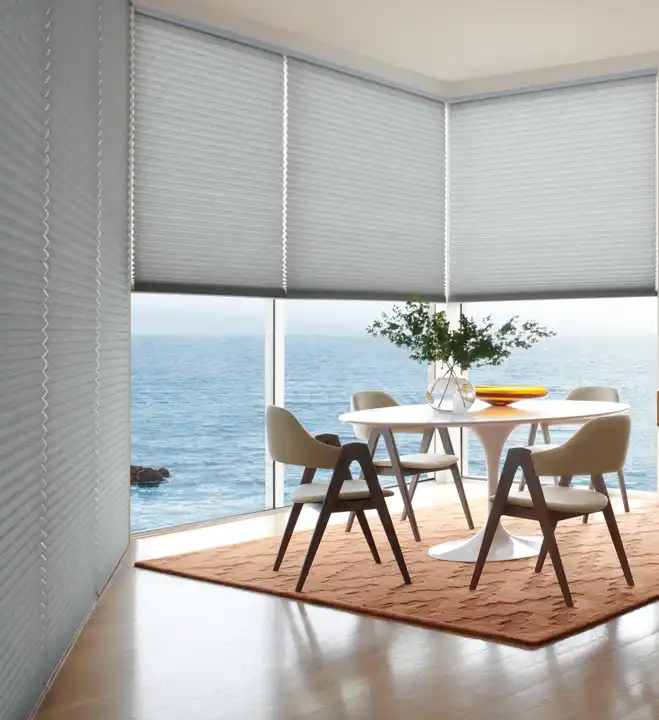
The name comes from the cellular construction inside the shade. When you look at the shade from the side, the fabric forms pockets that resemble a honeycomb. Those pockets create an additional layer between the room and the window, which is one reason cellular shades are often chosen when comfort and insulation matter.
That becomes more noticeable as we move into the cooler part of the year. Glass is one of the places where a room can feel different from the rest of the house, especially near larger windows. A properly fitted honeycomb shade does not turn the window into a wall, but it can add another layer at the glass while still giving you a clean, finished window treatment.
Fall Light Changes the Way a Room Feels
The light coming through your windows in October is not the same light you were dealing with in the middle of summer. The sun sits lower, glare can reach farther into the room, and a window that was not a problem a month ago may suddenly be putting light directly on a television, desk, dining table, or favorite chair.
Honeycomb shades can be ordered in different opacity levels, which gives you room to decide how much natural light you want to keep. A light-filtering fabric can soften the brightness without shutting the room down, while a room-darkening option makes more sense in a bedroom or another space where stronger light control matters. I would rather match the fabric to the room than put the darkest option everywhere just because it blocks the most light.
Privacy Matters More Once the Lights Come On Earlier
One of the biggest seasonal changes I see is not really about the temperature. It is about privacy. During summer, you may still have plenty of daylight when you are cooking dinner or sitting in the living room, but in fall the lights inside the house come on much earlier and the windows can suddenly feel a lot more exposed from outside.
Honeycomb shades are a clean way to deal with that because they can provide privacy without adding a lot of visual weight to the window. Depending on the fabric you choose, you can keep the room feeling bright during the day and still close the treatment when evening privacy matters. That is especially useful on street-facing windows, bedrooms, bathrooms, and rooms that sit close to a neighboring home.
Top-Down and Bottom-Up Can Be Extremely Useful
On the right window, top-down and bottom-up operation can be one of my favorite ways to use a honeycomb shade. Instead of opening the entire shade from the bottom, certain configurations allow you to lower the top while keeping the lower part of the window covered. That can give you natural light higher in the window while preserving privacy where people can actually see into the room.
It is not the right answer for every opening, and product availability depends on the specific shade and operating system. When it works, though, it can be especially useful for bedrooms, bathrooms, front rooms, and homes where the window faces a sidewalk or neighboring property. It gives you more control than simply choosing between fully open and fully closed.
Bedrooms Are a Natural Fit for Honeycomb Shades
Bedrooms usually need a combination of privacy, light control, and easy daily operation. Honeycomb shades can handle all three, and the fabric choice lets you decide whether you want softer morning light or stronger room darkening. The fit around the window matters too because light can still enter around the edges even when the fabric itself is designed to darken the room.
I also pay attention to how the shade will be used every day. If you open it every morning and close it every night, the controls need to feel easy and natural. If the window is tall, behind furniture, or otherwise awkward to reach, that is when motorization may be worth considering instead of turning the shade into something you avoid adjusting because it is inconvenient.
Motorization Makes Sense on the Windows You Actually Use
I do not think every shade in a house needs a motor. There are plenty of normal windows where a manual honeycomb shade works perfectly well and keeps the project simpler. Motorization earns its place when it solves a real problem, such as a hard-to-reach opening, several shades that move together, or a room where the treatments are adjusted several times a day.
Automated honeycomb shades can also make changing fall light easier to manage. If a room gets bright at the same time every afternoon, scheduled operation can reduce the need to walk around adjusting every window by hand. The point is not adding technology for the sake of technology. The point is making the room easier to live in.
Honeycomb Shades Do Not Have to Look Utilitarian
People sometimes think of cellular shades as purely practical, but the finished look depends heavily on the fabric, color, scale, and how the shade relates to the rest of the room. A soft neutral can disappear into the background, while a richer color can become part of the design. Some rooms need the shade to stay quiet, and others can handle something with more personality.
This is another reason I bring samples into the home. Color behaves differently next to your flooring, paint, furniture, and actual daylight than it does on a screen. A fabric that looks gray in a photograph may pull warm or cool once it is in the room, and you should be able to see that before you order a custom treatment.
Hunter Douglas Duette Is One Honeycomb Option
Hunter Douglas Duette shades are one of the honeycomb products I can show homeowners who want to compare cellular options. Like any custom treatment, the right configuration depends on the size of the window, how much light you want, the operating method, privacy needs, and the overall look of the room. The product name matters less to me than making sure the shade solves the problem you actually called me about.
There are also situations where another treatment makes more sense. A roller shade may be simpler for one room, drapery may be the better finishing layer somewhere else, and blinds or shutters may give you the adjustable light control you want. I like honeycomb shades, but I am not interested in forcing them onto a window where another option is better.
Fall Is a Good Time to Look at the Windows You Live With Every Day
If you are curious about honeycomb shades, pay attention to your windows over the next few days. Notice which rooms feel exposed after dark, where glare is showing up, which windows feel colder when you sit near them, and which treatments you keep adjusting because they never seem quite right. Those observations are more useful than picking a product from a catalog first.
When I come out for an in-home consultation, we can look at those problems in the room where they are happening and compare fabrics, colors, privacy levels, and operating options in the actual light. Honeycomb shades can be a great fall solution because they are practical without taking over the room, and when they are fitted correctly, they can make the window feel much more finished for the months ahead.