
End of Summer in Window Treatments
By the end of summer, most homeowners have a pretty good idea of which windows are working for them and which ones are not.
Maybe one room has been getting too warm in the afternoon. Maybe the sunlight is stronger than you expected. Maybe a bedroom is not getting dark enough, or a street-facing window gives you less privacy than you would like once the lights come on at night.
Sometimes the issue is even simpler than that. The shade is hard to reach, frustrating to operate, or you have just realized that what is on the window does not really work with the room anymore.
Those are the things I want to know when I meet with a client.
I do not expect you to already know what product you need. I would much rather hear what has been bothering you, because that gives me a better place to start than simply picking something from a catalog.
Summer Tends to Make Window Problems Obvious
Summer gives you a lot of information about your windows.
The days are longer, the sun is stronger, and certain rooms can change dramatically throughout the day depending on where the light is coming from.
A window that seemed perfectly fine in the spring may suddenly be producing glare across a television, heating up a room in the afternoon, or letting in much more light than you expected.
That does not automatically mean the solution is to block everything out.
Some clients want to preserve as much natural light as possible. Others care more about reducing glare, keeping a bedroom darker, improving privacy, or making a room more comfortable.
I always look at the actual window before I start recommending products.
I want to see where the light is coming from, how the room is used, what the window faces, how easy it is to reach, and what the client actually wants to change.
Privacy Changes as the Days Get Shorter
Privacy is one of the biggest things people notice as summer ends.
During the summer, it stays light outside much later. As we move into fall, it gets dark earlier, and suddenly you may be turning lights on inside while there is still a lot of activity outside.
A window that felt private during the day can feel very different at night.
That is especially important for windows facing a street, sidewalk, neighboring home, or another area where people can see in.
When I work with a client, I want to know how much privacy they need and when they need it.
Some people want complete privacy. Some still want to be able to see outside. Some want natural light during the day but do not want to feel exposed after dark.
There are different ways to handle all of those situations, but I need to understand the client before I can tell them which one makes the most sense.
Think About How You Actually Use the Window
Function matters just as much as appearance.
If you have spent the summer avoiding a particular shade because it is difficult to reach or annoying to operate, that tells me something.
A window treatment can be beautiful, but if you do not want to use it, then it is not doing its job.
This is also where I start thinking about the person who is actually living with it.
A client who is 85 may have very different needs than a 35-year-old homeowner. A tall window may be perfectly manageable for one person and a constant frustration for another. A room where the shades are adjusted several times a day may benefit from motorization, while another room may not need it at all.
I do not recommend motorization simply because it is available. I recommend it when it makes the window easier, safer, or more practical for the person using it.
Bedrooms Usually Make Light Control Problems Easy to See
Bedrooms are a good example of how summer can reveal whether a window treatment is really working.
The sun comes up earlier and stays out later, so if the current treatment is not giving you enough light control, you usually know by now.
Some clients want a room to be very dark. Others only want to soften the light. Some want filtered light during the day and more privacy or darkness at night.
There is no single answer that works for every bedroom.
I need to know who uses the room, when they sleep, how much light reaches the window, and what they want the room to feel like.
I do not like making recommendations without seeing the space first.
End of Summer Is Also a Good Time to Think About Design
As summer winds down, people start spending more time indoors again, and the decorative side of the room becomes more noticeable.
This is one of my favorite parts of window fashions.
I love projects where I can solve the functional problem and also make the room feel more complete.
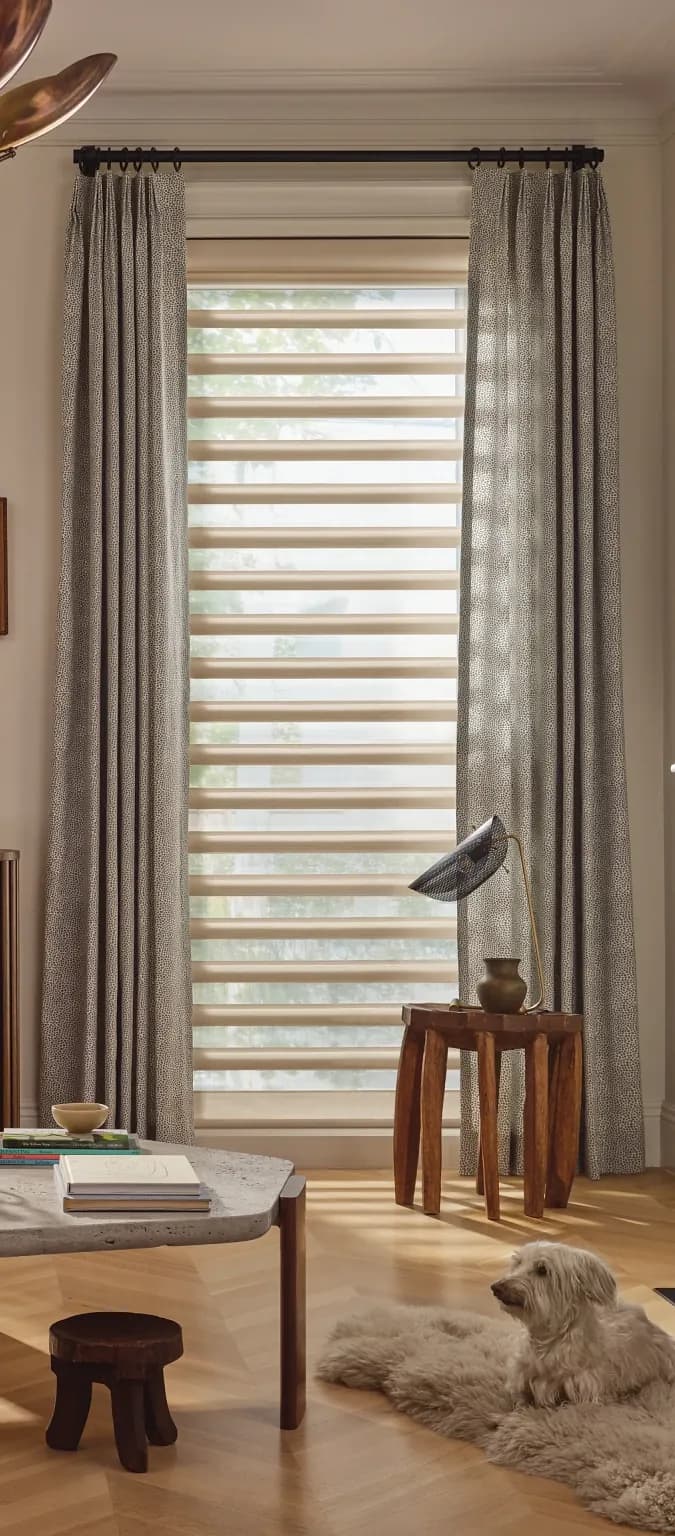
That might mean layering a shade with drapery, introducing more texture, adding color, or choosing something that works better with the furniture, flooring, and overall style of the home.
I also like bringing fabric and texture books into the home because materials can look completely different once you see them in the actual room.
The light changes them. The wall color changes them. The flooring changes them. Even the direction the window faces can affect how something looks.
That is part of why I prefer in-home consultations. I can make a much better recommendation when I can see everything together and get a feel for the client at the same time.
If You Tried Something Yourself and It Did Not Work, That Is Common
I meet a lot of homeowners who bought something themselves and later realized it was not quite right.
Maybe the shade technically fit, but the mounting did not work the way they expected. Maybe it did not provide enough privacy. Maybe the fabric looked different once it was installed, or the amount of light coming through was not what they had in mind.
There are a lot of details involved in window treatments that are easy to overlook if you do not work with them every day.
Mounting depth, window construction, privacy, light direction, reach, operation, fabric, color, and room use can all affect the final result.
For a larger custom window treatment project, I usually encourage people not to guess.
I would rather help you make the right decision the first time.
You Do Not Have to Redo the Whole House
Another thing I tell clients is that you do not necessarily need to replace every window treatment in the house at once.
Sometimes one room is the problem. Sometimes there are only two or three windows that need attention. Sometimes everything else is perfectly fine.
I would rather focus on the windows that actually need help than tell somebody they need to redo the entire house.
We can also plan things in stages if that makes more sense.
If you know you want to continue later, I can help you make choices now that will still work with what you may want to do in the future.
Use What Summer Taught You
By the end of summer, your home has probably already told you what is not working.
You know which rooms get too bright. You know where you feel exposed. You know which window treatments are difficult to operate. You know where you want more privacy, better light control, or something that simply looks better in the room.
That gives us a very good starting point.
After more than 25 years in the industry, I still approach each home the same way. I look at the window, I look at the room, I talk to the client, and then I start figuring out what actually makes sense for them.