
How to Choose Window Treatments for Winter Privacy
One of the things homeowners notice most when the days get shorter is how quickly the windows change after sunset. A living room that feels open and comfortable in the afternoon can feel exposed by the time dinner starts.
It is not that the window has changed. The light has. When the inside of the house is brighter than the outside, people outside may be able to see more of what is happening indoors. That is why I like looking at privacy in the evening, not just while the sun is out.
Start With the Rooms People Can Actually See
A street-facing living room may need privacy earlier in the evening than a bedroom overlooking a private backyard. A kitchen window above the sink may look toward a neighboring house. A stairwell or entry window may be visible from the sidewalk.
I start with the sightline: where could someone be standing, what could they see, and what parts of the window need to be covered?
The answer may be a full shade, a treatment that lets light in from above, or a covering that stays partly closed. There is no reason to darken a room more than necessary if the privacy concern is limited to one part of the window.
Light-Filtering and Room-Darkening Are Different Decisions
Light-filtering fabric softens daylight and can make a room feel bright and comfortable while the shade is closed. However, privacy depends on the specific material, its openness, the lighting, and what someone can see through it.
Room-darkening fabrics generally provide stronger light control, but the finished installation can still have light gaps around the edges. A bedroom where someone wants to sleep late may need a different solution from a living room where preserving daylight is important.
I recommend comparing actual samples rather than treating the product label as a promise that every room will perform the same way.
Top-Down and Bottom-Up Options Can Help
In some rooms, keeping the lower part of a window covered solves the privacy problem while letting useful daylight enter from the top. Certain cellular-shade configurations can provide that flexibility.
For example, a front room facing a sidewalk may need coverage where people could look in, but the homeowner might still want to see sky and trees from the upper portion of the window.
Availability depends on the exact product and operating system, and not every opening is a good fit. When the configuration works, it can offer a more comfortable compromise than fully open or fully closed.
Blinds Can Control the Angle of the View
Blinds have a different advantage: the slats can be tilted to redirect light and limit direct views. The amount of privacy varies with the slat angle, position, and viewing direction.
This can be useful in kitchens, offices, and living rooms where you want to make small adjustments as the light changes. If you need complete visual coverage, we can compare blinds with other products designed for stronger privacy.
Drapery Adds Another Layer
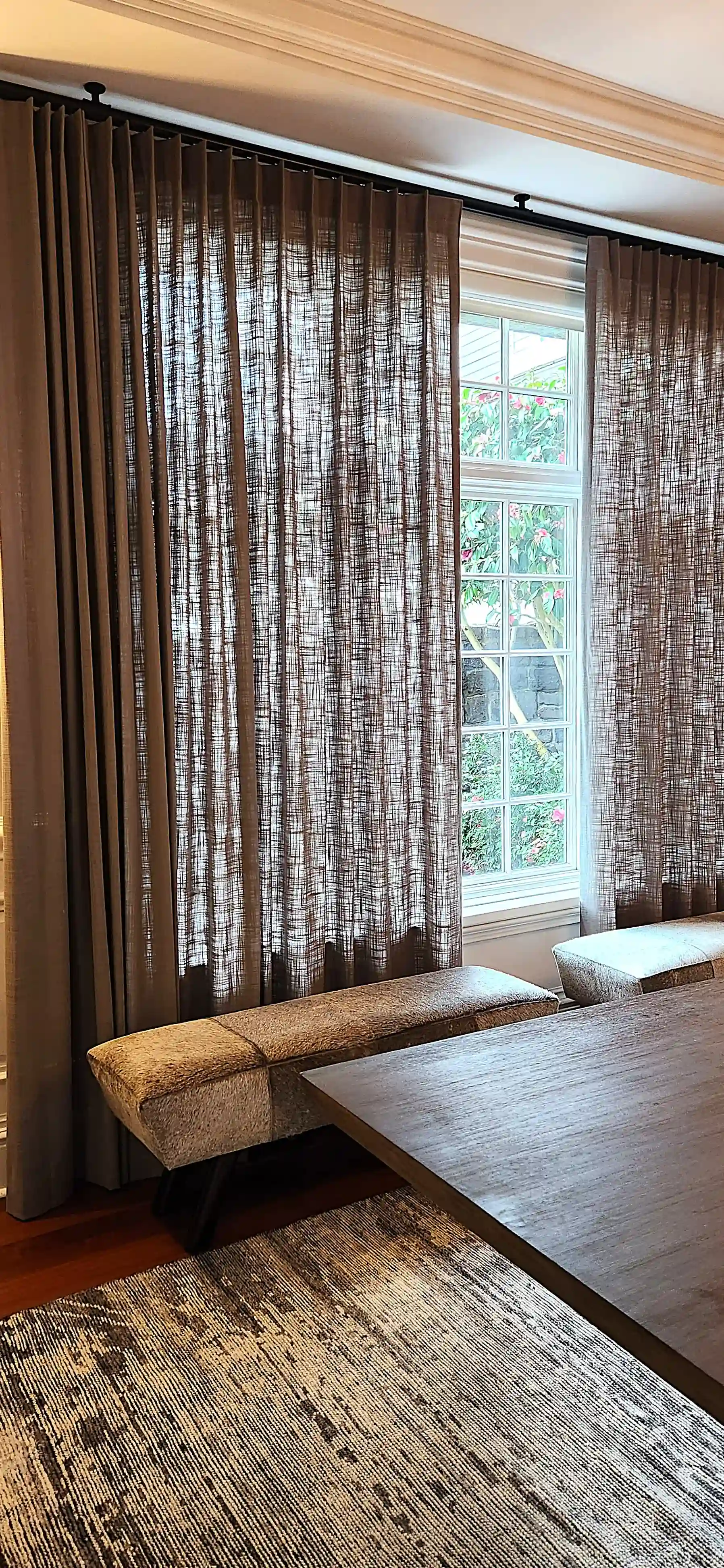
Drapery can be the main treatment or a second layer over a shade. Some homeowners like using a simpler shade throughout the day and closing drapery at night when they want the room to feel more private and finished.
The right fabric, fullness, lining, and mounting position affect how well it works. So does the room itself. A small window may look great with a modest treatment, while a large picture window can carry more dramatic fabric.
The goal is to make the room comfortable without installing more material than it needs.
Convenience Matters When Every Evening Is Dark
A treatment that is difficult to reach or awkward to operate tends to stay in the wrong position. On tall windows or a group of windows you close every evening, an appropriate motorized system may be worth considering.
There is no need to automate every shade. I like to choose the operating system based on how the household uses the room rather than adding features that will rarely be touched.
Look at the Window After Sunset
Before choosing a new treatment, take a minute to stand outside at the time privacy matters most, if you can do so safely and without disturbing anyone. See which windows are exposed, whether existing treatments provide enough coverage, and how the indoor lighting affects visibility.
That gives us a much better starting point than choosing a fabric from a photograph.
Window Fashions Northwest helps homeowners across Pierce County and the South Sound compare blinds, shades, and drapery in their own homes. If winter evenings are making your windows feel more exposed, we can choose coverage that protects privacy without giving up the natural light you enjoy during the day.