
Best Window Treatments for Sliding Glass Doors
Sliding glass doors are different from most windows because they are doing two jobs at once. They bring a lot of light into the room, but they are also a doorway that may get used all day long. That means the treatment has to give you privacy, control glare, work with the room, and still get out of the way when someone wants to go outside.
When I help someone choose a treatment for a sliding door, I start with how the door is actually used. A patio door that gets opened twenty times a day needs something different from a slider in a dining room that is only opened once in a while. I also look at which side opens, where the handle is, how much wall space is beside the door, and whether furniture will interfere with the treatment when it stacks back.
The Best Options Usually Move With the Door
Because sliding doors move side to side, treatments that also move side to side tend to be the easiest to live with. Vertical blinds are still a very practical option for that reason. They can stack away from the active side of the door, and the vanes can be tilted when you want light without giving up all of your privacy. The newer materials and finishes can also look much cleaner than the basic vertical blinds people remember from years ago.
Panel track systems work in a similar direction but have a more modern look. Instead of narrow vanes, they use wider fabric panels that overlap as they move across the opening. They can be a very nice choice when you want something simple and clean on a large wall of glass, especially if the room already has roller shades or another fabric treatment on nearby windows. The main thing I look at is how much space the panels need when they are open. A beautiful treatment is not very useful if the stack ends up covering the part of the door you walk through.
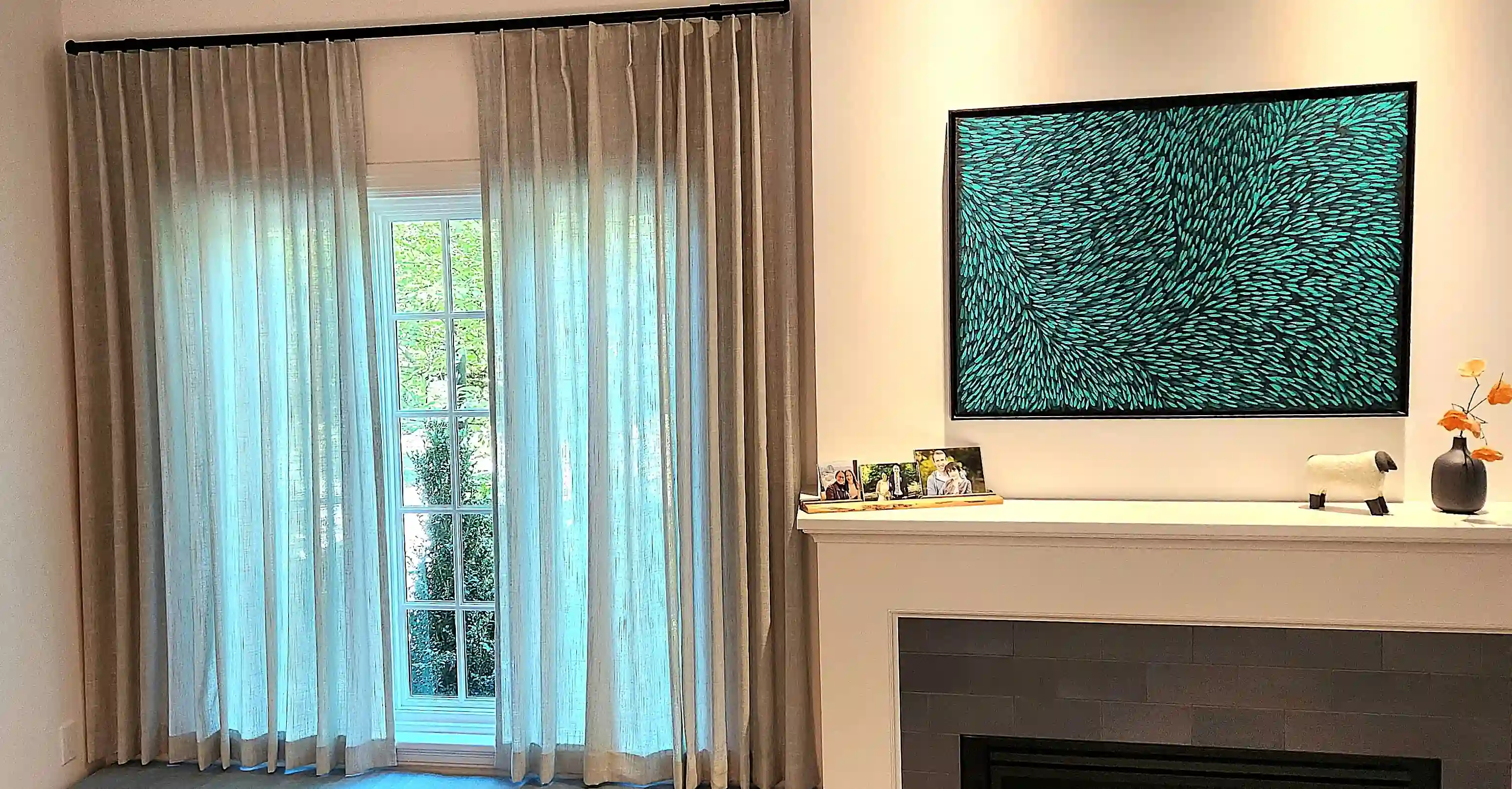
Drapery is another strong option, especially in a room that needs more softness. A traversing drapery can open with the direction of the door, provide good privacy at night, and help make a large glass opening feel finished instead of bare. It also gives you a lot more freedom with color, texture, and pattern. The track, rod, panel fullness, and stack all need to be planned around the actual wall, so this is one place where measuring only the glass does not tell the whole story.
Shades Can Work, but Daily Use Matters
Some homeowners really want a shade over the sliding door because they like the clean look or want it to coordinate with the rest of the room. That can work, but I always ask how often the door gets used. A large shade normally moves up and down while the door itself moves side to side, so you may need to raise the shade every time somebody wants to go through.
If the door is used occasionally, that may not bother you at all. If it is the main route to the backyard, deck, or dog run, it can become irritating pretty quickly. In those cases, I usually lean toward something that traverses to the side because it follows the way the opening is already being used.
Motorization can make a large shade more convenient, especially if the opening is tall or the controls would be awkward to reach. I still would not choose it just because it is available. If a simple manual treatment is easier for the household, that is usually the better answer.
Privacy and Afternoon Sun Change the Conversation
Sliding doors can feel wonderfully open during the day and surprisingly exposed at night. Once the lights are on inside, a large sheet of uncovered glass can make a room feel much less private than it did in the afternoon. If the door faces a neighbor, a street, a shared yard, or another visible area, nighttime privacy becomes one of the first things I plan around.
The direction the door faces matters too. West-facing glass can bring in a lot of heat and glare late in the day, while another door may never get enough direct sun for that to be a major concern. Vertical vanes can be adjusted as the light changes, panel fabrics can soften glare, and lined drapery can give you stronger coverage when you want it. The goal is not always to block the light. Most of the time, it is to make the room more comfortable without losing what you like about having that much glass.
Pets and kids can also change what works best. If the door is constantly opening and closing, I want the treatment to clear the doorway easily and hold up to daily use. If the dog is in and out all day, or children are using the door themselves, convenience and durability matter just as much as the fabric sample.
The Hardware and the Rest of the Room Matter Too
Sliding doors have handles, deeper frames, trim, thresholds, and sometimes very little mounting space above them. Those details are easy to overlook until a treatment is installed and starts rubbing against the handle or sitting awkwardly against the trim. I look at all of that before deciding how the treatment should mount and where it should stack.
I also like to see what is happening on the rest of the wall. A sliding door may sit next to regular windows, and the treatments do not have to match exactly to look good together. A panel track can coordinate with roller shades through fabric or color. Drapery can pick up a texture already used in the room. Vertical blinds can be chosen in a finish that makes sense with nearby blinds or shades. I would rather make the whole room feel intentional than force every opening to wear the exact same product.
Start With the Door, Not the Catalog
There is no single best treatment for every sliding glass door. Vertical blinds are practical and easy to operate. Panel tracks can give you a cleaner contemporary look. Drapery adds softness and can handle privacy very well. Shades can work nicely when the way the door is used makes sense for them.
The best choice is the one that fits your actual door, the amount of privacy and light control you need, and the way people move through the room every day. If you are trying to cover a sliding glass door in Tacoma or the South Sound, I can come to your home, look at the opening with you, and compare the options where they will actually be installed. That is usually the fastest way to figure out what will look right and still be easy to live with.