
Do Window Treatments Need to Match Throughout the House?
This is a question I hear when someone is updating more than one room: do all the window treatments need to match?
My answer is no. They need to make sense together, but they do not need to be identical. A kitchen window above a sink has a different job from a living room picture window. A bedroom needs a different kind of privacy than a dining room. If we choose one treatment for every window just to make everything match, we can end up with a house that looks coordinated but does not work very well.
I prefer to start with how the rooms are connected and what each window actually needs.
Think About What You See From One Room to Another
Open-concept homes are where this question comes up most often. You may be standing in the kitchen and looking across the dining room into the living room. Several windows are visible at the same time, sometimes from the front door.
That does not mean they all need the same product. It means we should pay attention to the overall look. Are the fabrics warm or cool? Do the colors feel related? Are the treatments visually quiet, or are several of them trying to be the main feature?
For example, simple shades in the kitchen can look perfectly at home next to soft drapery in the living room. They do not have to be a matching set. They just need to work with the same space.
Let the Window Decide Some of the Details
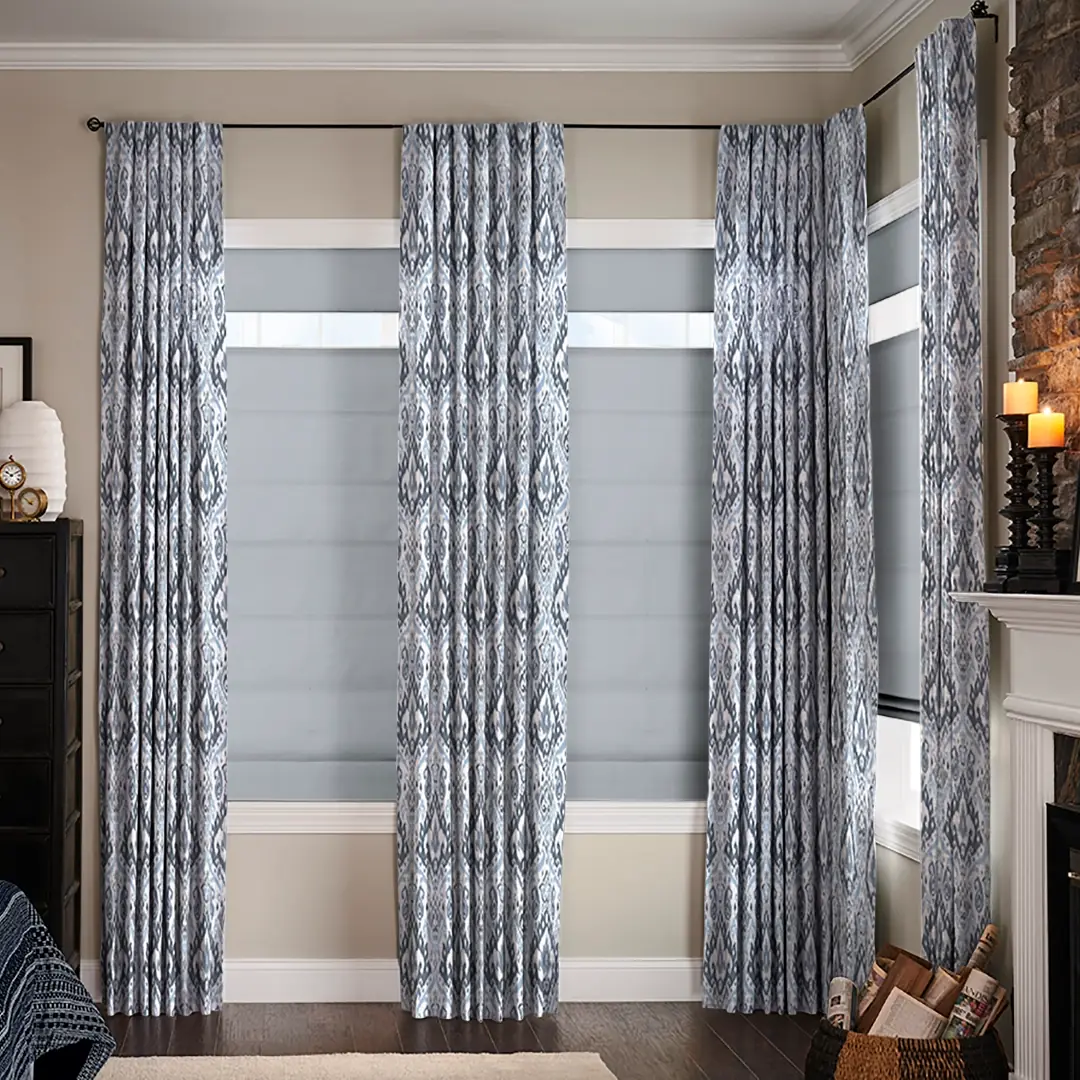
The window itself matters. A narrow window near a countertop may be better suited to something that stays close to the glass. A wide living room window might benefit from a shade for daily light control with drapery to finish the room. A sliding door needs a treatment that works with people coming and going.
I also look at the trim, depth of the window, nearby cabinets, and furniture. A beautiful treatment that gets in the way of a door handle or is difficult to operate is not a good choice.
When we choose based on the window and the room, the differences usually feel intentional rather than mismatched.
Use a Common Thread Instead of an Exact Match
There are several simple ways to make different treatments feel connected:
- Color: Repeating a warm neutral, soft white, or another color found throughout the house can tie the rooms together.
- Texture: Natural-looking woven materials, smooth fabrics, and soft drapery can share a similar feel without being the same product.
- Hardware: Consistent finishes and thoughtful mounting heights help the windows look like they were planned together.
- Visual weight: If one room has dramatic drapery, keeping neighboring treatments quieter can give the eye somewhere to rest.
You do not need to use every one of these ideas. Sometimes a single connection is enough.
Bedrooms Are Allowed to Be Different
The bedrooms are where I would be least concerned about matching the rest of the house. If you need room-darkening shades to sleep comfortably, that matters more than repeating the light-filtering treatment in the living room.
Children's rooms, guest rooms, and primary bedrooms can all have different needs. Some people want to wake up with natural light. Others work unusual hours and need more control over it.
We can still choose colors and fabrics that fit the home, but I would never sacrifice the way a bedroom functions just to keep every window the same.
What About Blinds in One Room and Shades in Another?
That can work very well. Blinds give you adjustable slats for directing light and maintaining some visibility. Shades create a different, usually softer surface across the window. Drapery adds another layer of texture and can make a room feel more finished.
The right choice depends on the sun, privacy, view, and how often someone adjusts the treatment. A living room with a beautiful view may need a different approach from a street-facing home office where the afternoon glare hits a monitor.
There is no rule that says a house must commit to one type of window covering.
See the Materials Together Before Deciding
Photographs can be helpful, but they do not show how a fabric will look next to your own flooring, paint, cabinets, and furniture. They also do not show what happens to the color when the sun moves across the room.
That is one of the reasons I bring samples into your home. We can look at the materials in the same light, stand where you actually see the windows together, and decide which combinations feel right. It is much easier than trying to remember how a color looked on a screen.
You Can Coordinate a House One Room at a Time
You do not have to replace every treatment at once. If the living room is the priority, we can start there and keep the other rooms in mind. Choosing a versatile color, fabric, or style can make future updates easier without forcing you into a whole-house purchase today.
The goal is a home that feels consistent and comfortable, not a house full of identical windows. If you are trying to figure out which treatments should match and which should be different, I would be happy to look at the space with you. Window Fashions Northwest offers in-home consultations so we can choose what works for your rooms instead of following a rule that may not fit your home.