
What Window Treatments Work Best on French Doors?
French doors are one of those places where a beautiful window treatment can become frustrating very quickly. The glass may need privacy and light control, but the door still has to swing, the handle still has to turn, and the treatment cannot rattle against the frame every time somebody walks through.
When I help a homeowner choose a covering for French doors, I start with the door itself. Which way does it open? Is there a lever handle, a knob, or a decorative backplate? Does one leaf stay shut most of the time? Is there room above the glass for mounting hardware? Those details decide which products are practical before we ever get to color.
A Door-Mounted Shade Can Keep the Glass Covered
A shade mounted directly on each door leaf moves with the door when it opens. That can be a very clean solution because the covering stays aligned with the glass instead of hanging across the entire doorway.
The challenge is clearance. Some shades have a headrail or bottom rail that projects farther than expected. If the shade interferes with a lever handle or catches against the door frame, the product may look good in a photograph but be difficult to live with.
A carefully measured roller or cellular shade may work on an appropriate door. The window dimensions are only part of the measurement, though. The mounting surface, hardware, and movement of the door all matter.
Blinds Give You Adjustable Light, but Consider Movement
Blinds let you tilt the slats without raising the whole treatment. That can be useful on doors facing a patio, street, or neighbor where you want daylight without a completely open view into the room.
Because a door moves, a blind may need appropriate hold-down hardware or another suitable configuration to limit swinging. That depends on the product and how the door is built.
I also pay attention to the stack when the blind is raised. If the headrail or stacked slats cover too much of the glass, the result may not provide the open view that made you want French doors in the first place.
Drapery Can Cover the Whole Opening
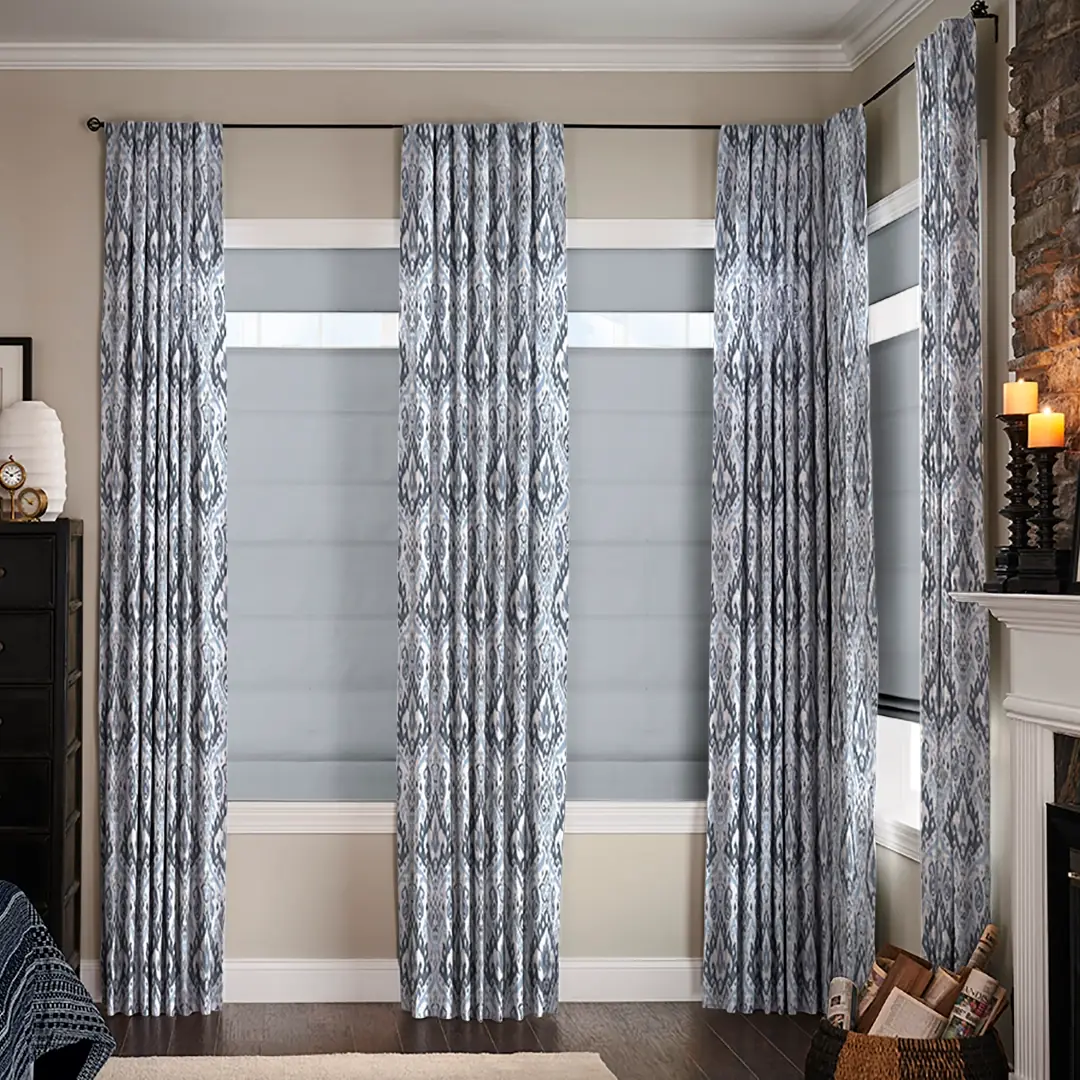
Sometimes the best answer is not attached to the door at all. Drapery mounted above or beside the opening can bring softness to a living room or dining room and provide privacy when the doors are closed.
The fabric needs somewhere to go when you want to use the doors. A panel that stacks in front of the active door may be inconvenient. We also need enough clearance so the door does not catch on the fabric or hardware.
This approach can work especially well when the French doors are a prominent design feature and the homeowner wants the treatment to frame the opening rather than sit directly on the glass.
Pay Attention to Privacy After Dark
French doors often look private enough during daylight, especially if they face a fenced yard or landscaping. Once the lights are on indoors, the view can change.
If nighttime privacy is important, I want to evaluate fabric opacity with the room's actual lighting in mind. A light-filtering fabric may soften daylight beautifully, but it does not necessarily provide the same privacy after dark as a more opaque material.
Bedrooms and street-facing rooms may need stronger coverage than doors that open onto a secluded patio.
Door Handles and Trim Can Decide the Product
A decorative handle can use up the exact space where a shade needs to operate. Raised trim, shallow glass surrounds, unusual hinges, and narrow door stiles can all limit the mounting choices.
That is why I would rather measure the actual door than recommend a product based only on the glass width. We need to know whether the door will open completely, whether the shade clears the hardware, and whether the installation has a suitable mounting surface.
For pairs of French doors, the two treatments should also line up well when both leaves are closed.
Think About How Often You Use the Doors
If the doors open several times a day, an easy-to-operate, low-profile treatment usually deserves serious consideration. If they mostly stay closed and serve as a large source of natural light, you may have more freedom to choose drapery or a treatment that prioritizes appearance.
Pets, children, furniture placement, and access to the backyard can all influence the decision. The right answer should feel natural during normal use.
Choose the Treatment in the Room
You do not have to use the same product on the French doors and every nearby window. Coordinating fabric colors, textures, or hardware finishes can tie the room together without forcing identical treatments onto different openings.
Window Fashions Northwest provides in-home consultations across Tacoma, Puyallup, and surrounding South Sound communities. If your French doors need privacy without sacrificing how they work, I can look at the door, the room, and your daily routine before we choose the treatment.